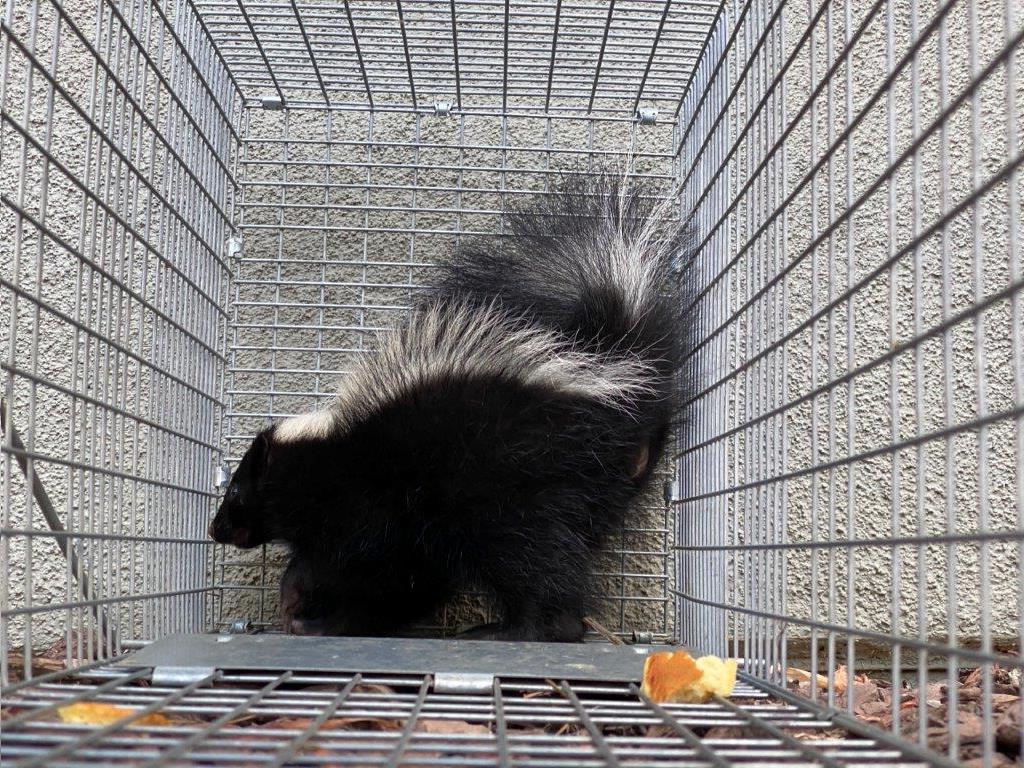
Skunks are annoying critters capable of a lot of destruction. They are nocturnal mammals, which means they stay up throughout the night, feeding on insects and slugs. Their feeding habits, which include chewing and digging, make them capable of damaging your property. It is, therefore, important to remove them before they cause too much damage.
There are several reasons why trying to remove a trapped skunk is a bad idea. Firstly, skunks are naturally shy, and they get agitated when cornered, surprised, or frightened. Secondly, it is a lot easier to remove skunks from your property through the exclusion method than trapping them.
Instead of battling with a trapped skunk, it is easier for you and safer to use the exclusion method to get rid of them. When you employ the exclusion method, the skunk can leave on its own but is unable to reenter. A skunk living inside your house, let's say your attic, for example, is able to go out and come back as much as it wants. The best thing to do is to isolate the entrance point and mount a one-way door. That way, the animal can leave but not gain access to the attic. If it comes back and cannot enter the attic, it will eventually seek out another place to build its den. Before you install the one-way door, it is important to make sure that the skunk does not have any kits inside; otherwise, it might destroy another point in a bid to reunite with its children.
One-Way Exclusion Structures
One-way exclusion structures come in various shapes and sizes. A popular one-way exclusion structure is the cage-like structure that has one end opened and the other carrying the one-way door. It allows the skunk to leave, while the door behind it snaps shut as soon as it steps on the trigger plate. You can attach the one-way exclusion cage to the sides of your building, keeping it sturdy and in place.
Another popular one-way exclusion structure is the funnel-like wire mesh tube. The one-way exclusion funnel circles around the entry point, and it narrows as it extends away from the building. As the skunk enters the mesh tube, it is unable to turn around, forcing it to continue its journey out of the tube. Once out, it cannot reenter the tube.
An important factor of the funnel is that the skunk is unable to raise its tail, canceling out the possibility of spraying its toxic fluids.
How to Use the One-Way Exclusion Funnel
A one-way exclusion funnel is one of the safest skunk extraction methods. To efficiently use the one-way exclusion funnel, you must first locate the den and ensure that it is free from baby skunks.
Once you find the den, the next thing to do is to find the primary entry point. This is the point that gives the skunk access to your property. When you find the primary entry point, mount the one-way exclusion funnel, secure it, and block every other potential entry/exit point. Once the skunk makes its way out, it cannot reenter again.
If you do find baby skunks inside, the best option is to allow them to grow for about six weeks before excluding all of them at once.
Once you are able to remove all the skunks from your property, the next step is to secure the area to avoid them coming back. This involves securing fences, limiting their food and water supply, and covering holes and crevices.
Go back to the Sandy wildlife removal home page.